
The ikigai diagram turns up at every second seminar: four circles — what you love, what you are good at, what you can be paid for, what the world needs — with your life’s work supposedly sitting in the overlap. It is a handsome diagram and, as usually presented, almost useless: it does not tell you what to do on Monday morning.
It becomes useful when each circle is tested with a number instead of a feeling. Then the picture turns into a two-week procedure.
What is wrong with the four circles
The trouble is that people answer all four from memory. “I love this” — have you done it eight hours a day for thirty days? “The world needs it” — have you met one person who paid? An overlap assembled from four guesses is still a guess; the diagram just makes it look convincing.
How to test each circle
What you are good at. The honest measure is money already paid to you. Not “I understand marketing”, but “I was paid to run ad campaigns, and here are the amounts”. If you have only ever had a salary, ask which part of the job colleagues from other departments came to you for.
What people need. Test it with search demand and living competitors. If nobody searches for the topic and nobody earns from it, that is not an open niche — it is the absence of a market. If competitors exist and have survived for years, demand is real.
What people pay for. Look not at “market size” but at the average deal and at who exactly pays. A niche with a hundred customers at a hundred euros and one with five at two thousand demand different businesses, even though the revenue matches.
What you love. The only reliable sign here is what you do unpaid and unprompted. Not “I like the idea”, but “I spent thirty evenings on it and nobody asked me to”.
Three of the four circles can be tested with outside data in a couple of days. Those are the ones to test: “I love it” lies least often, “the world needs it” lies most.
A two-week procedure
- Write down three to five directions where your skill is confirmed by money.
- For each, check search demand and find five living competitors older than two years.
- Establish the average deal size: from competitors’ price lists, from job ads, from talking to two people in the field.
- Build a simple page with the offer and show it to ten people from the target audience.
- Count actions, not likes: how many left contact details, agreed to a call, asked the price.
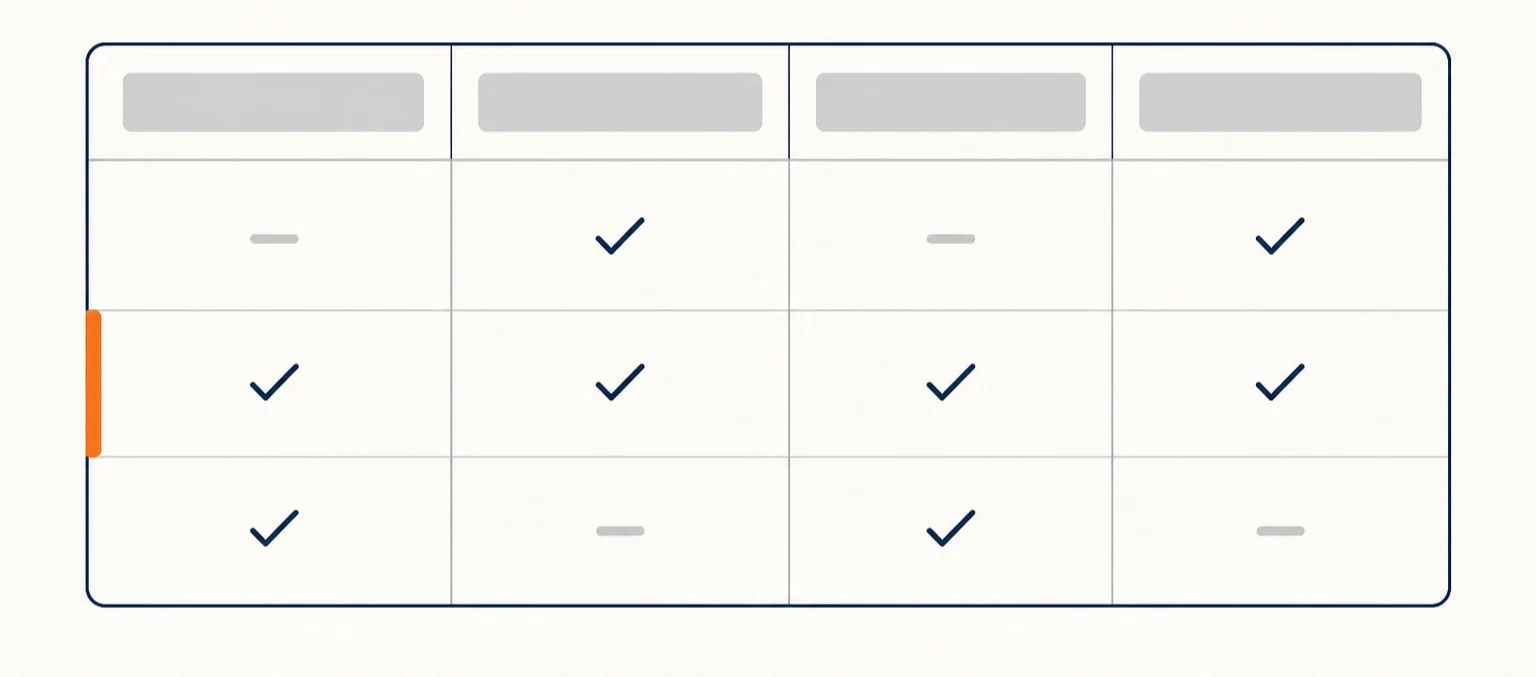
After two weeks you have a table instead of a feeling. The direction that has skill, demand and money at once usually turns out to be a single one — and almost never the one that looked obvious at the start.
If the overlap is empty
That happens, and it is a valid result. It means one circle has to be built up: skill through study and paid practice, demand by switching to an audience that has a budget. An empty overlap is not a verdict, it is a list of what is missing.
One last thing. Whatever you find this way still has to be sold — with a website, a funnel, negotiations. A good niche does not remove the work; it only makes the work make sense.
Checked on 4 August 2026.