“Can you guarantee we will like the design?” — this comes up in almost every negotiation. The honest answer is no. Anyone who guarantees it either misunderstood the question or is prepared to keep redrawing until you give up.
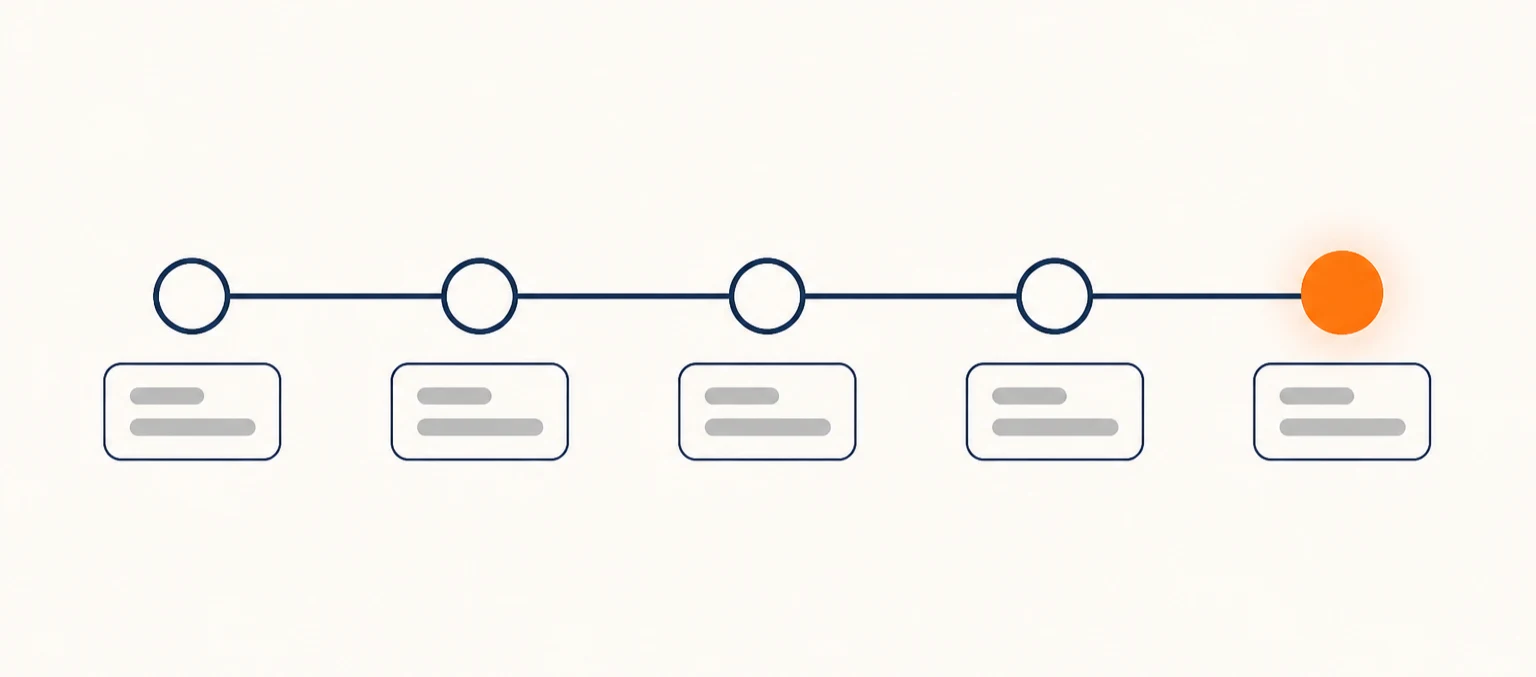
Taste cannot be written into a contract. A process can — one that stops “we don’t like it” from arriving as a surprise. Here it is.
Why “liking it” is a poor test
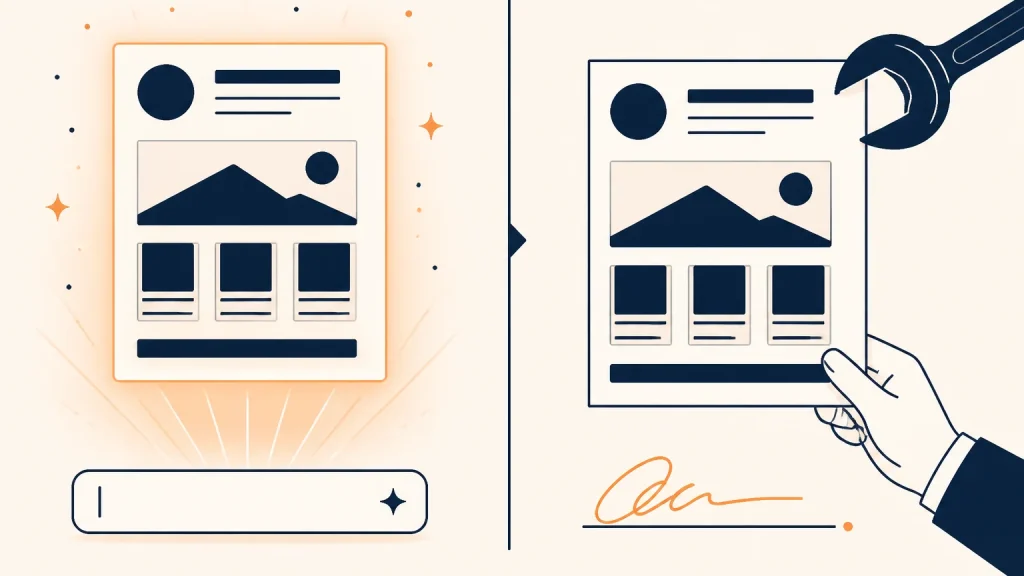
A website is not a painting. Its job is not to please the owner but to carry a visitor to an enquiry. Those two goals part company more often than people expect: dark minimalism may delight you and lose customers, while a dull but visible price block may irritate you and bring in money.
So I try to replace “do you like it” with two questions that can actually be answered: does the layout solve the problem, and is it clear why it was built this way.
Five steps that make the outcome predictable
1. I write the brief, not you
Sending a client a blank questionnaire with fields like “describe your target audience and USP” is a way of handing over your own work. I ask the questions out loud — about the business, the product, the buyers, the competitors, what has already been tried and what failed. Then I write the brief and agree it with you. That step alone exposes where we understand the task differently, and words are far cheaper to correct than layouts.
2. References — from both sides
You show sites you like; I show sites I consider right for the job. What matters is not beauty but wording: not “I like it”, but “I like this calm typography” or “I like that the price is visible immediately”. Taste turns into a list of features you can agree on.
3. Wireframe and prototype come before any beauty
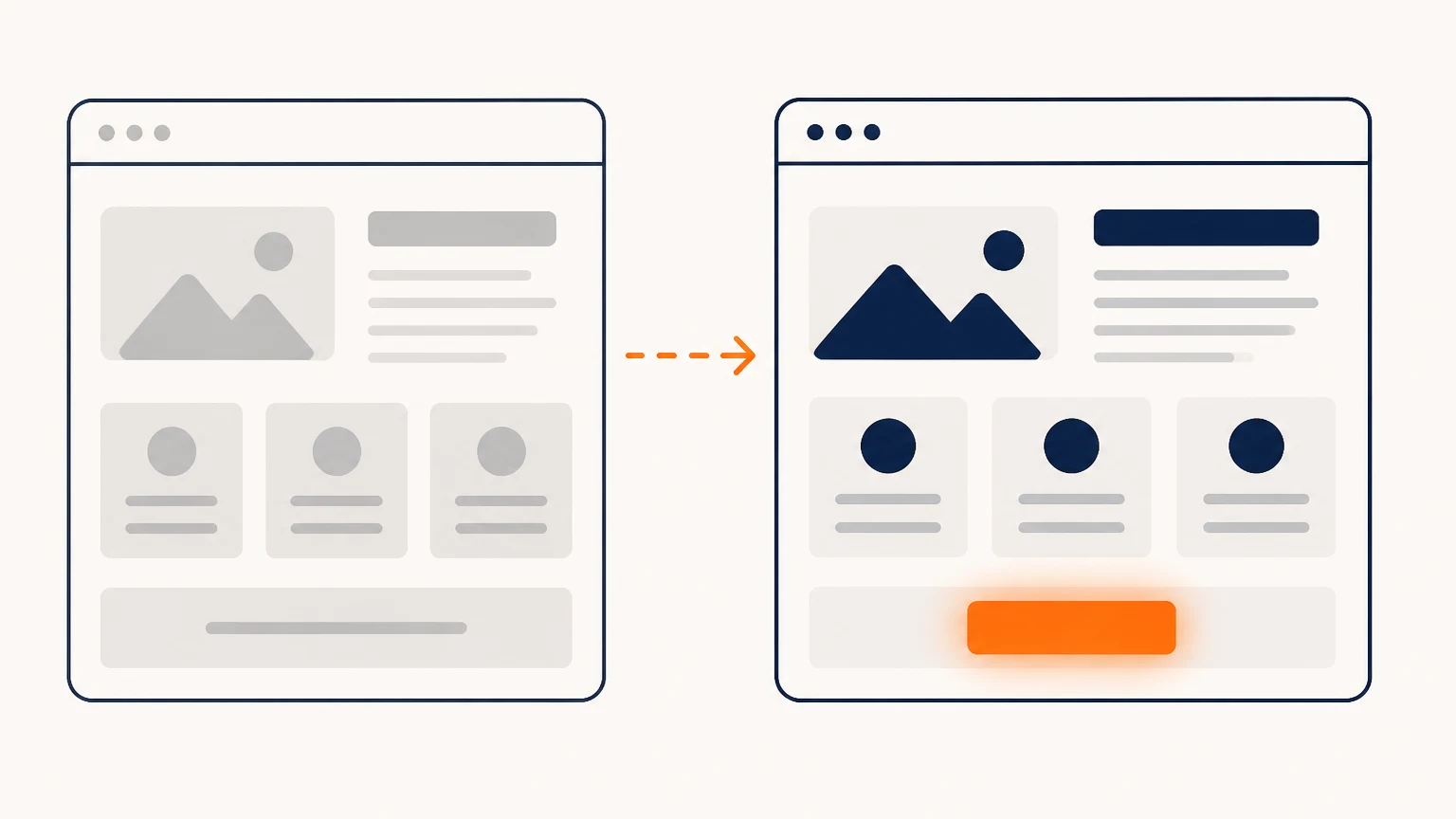
First a grey wireframe: what follows what, where the headings sit, where the trust blocks go, where the button is. Then a clickable prototype: how pages connect, what happens on a click, how the form behaves. Changes cost almost nothing here — moving a block in a wireframe takes minutes; moving it in a finished design takes a day.
Most of “we don’t like it” is really about structure, not colour. Agree the structure early and there is very little taste left to argue about.
4. One or two concepts, not five
Five options do not help you choose; they dilute responsibility. I show one, occasionally two, and explain every decision: why this type size, why this spacing, why the button sits here. We discuss whether it works, not whether it pleases.
5. The number of revision rounds is agreed in advance
The contract states how many revision rounds are included and what counts as a revision rather than a new task. That protects both sides: you from “that will be extra”, me from an endless loop. Two rounds are usually enough when the first four steps were done honestly.
So what do I guarantee
I guarantee the process: brief, references, wireframe, prototype, a concept with reasoning, an agreed number of revisions. I guarantee that at every step you see the result before it becomes expensive to change. And I guarantee that decisions will be explained — not “that is how I see it”, but “here is what it is for”.
In practice the question answers itself. By the time a design appears, you have taken part in every decision it grew from.
Checked on 4 August 2026.