A foundation trades in one currency: trust. A site either builds it or spends it — there is no third state.
The task
The foundation helps people affected by the war: children and orphans, large families, displaced people, pensioners, people with disabilities, service personnel. Each is its own audience and its own conversation.
A person is giving money to an organisation they cannot verify in person. They decide on indirect signals — how open everything looks. Any gap reads as something being hidden, even when the real cause is simply not enough hands.
The site also works in two directions at once: people come here not only to give help but to ask for it.
The approach
Reporting is in the main menu, not buried in the footer. Founding documents, financial reports, bank details, the board, the registration number — all in plain sight. A foundation that shows where the money went answers the main unspoken question before it is asked.
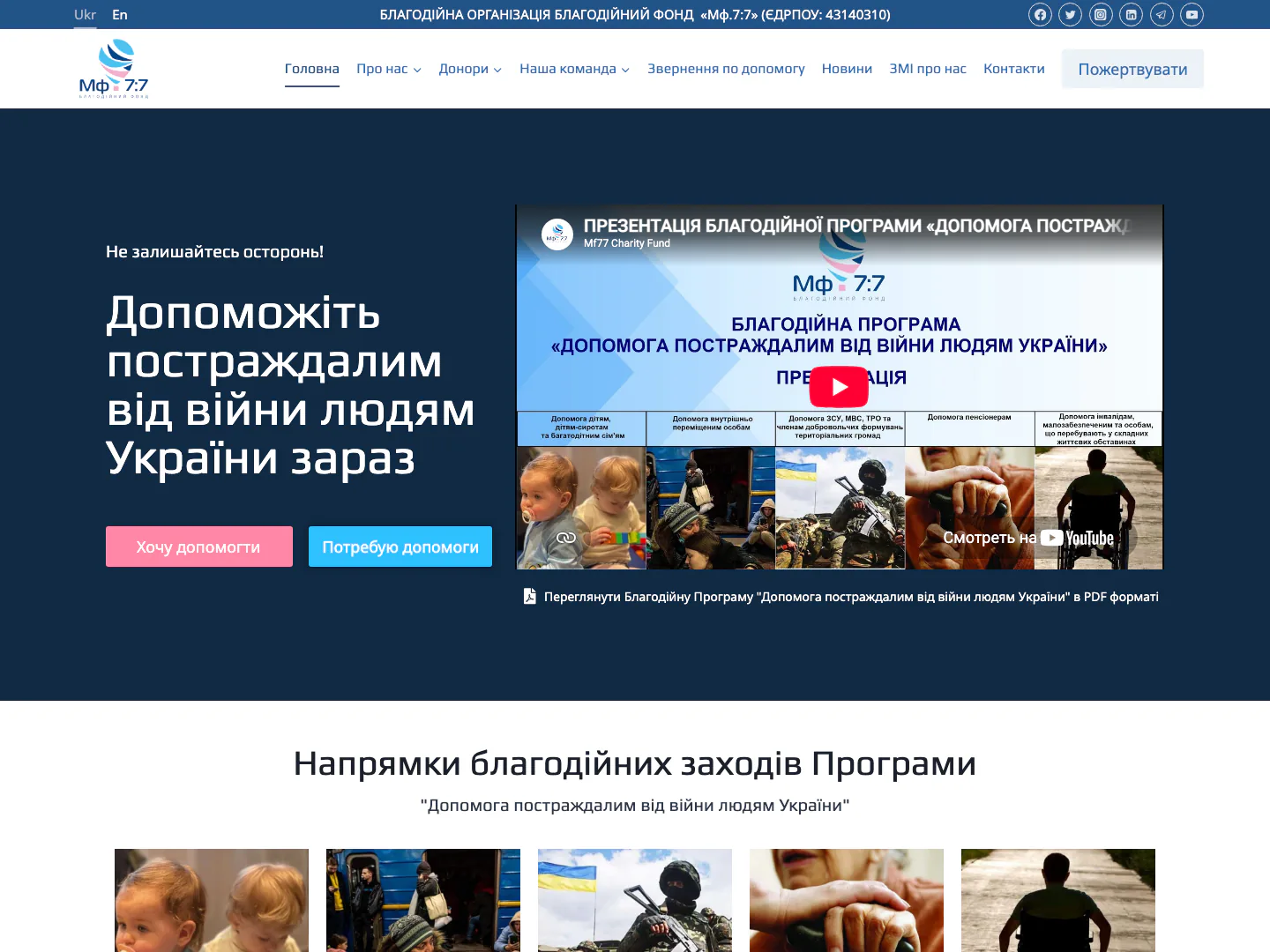
The aid programme is described concretely and published as a document. General words about doing good add no trust; a list of directions in plain language does.
Two entrances on the first screen: “I want to help” and “I need help”. These are different people in different states, and making the second search for their route among appeals for donations is unkind.
The fundraising counter is visible. Visible progress turns a donation from an unanswered transfer into taking part in something that is moving.
News with photo reports. Aid delivered and confirmed with pictures works as evidence. For a foundation this is not a news feed, it is reporting continued.
Separate sections for volunteers and donors, each with its own journey: become a volunteer, claim recognition as a giver.
Two language versions, Ukrainian and English: help also comes from abroad.
The result
The site removes doubt before it becomes a reason to close the tab, and serves those giving help as readily as those asking for it.
One thing that portfolios rarely mention: the foundation is still running this site, still publishing news, and has never asked for a rebuild. That is the real test of a project — not how it looked on handover day, but what became of it years later.